What is a rate buydown, and is it worth it?
By Edelio Sanchez
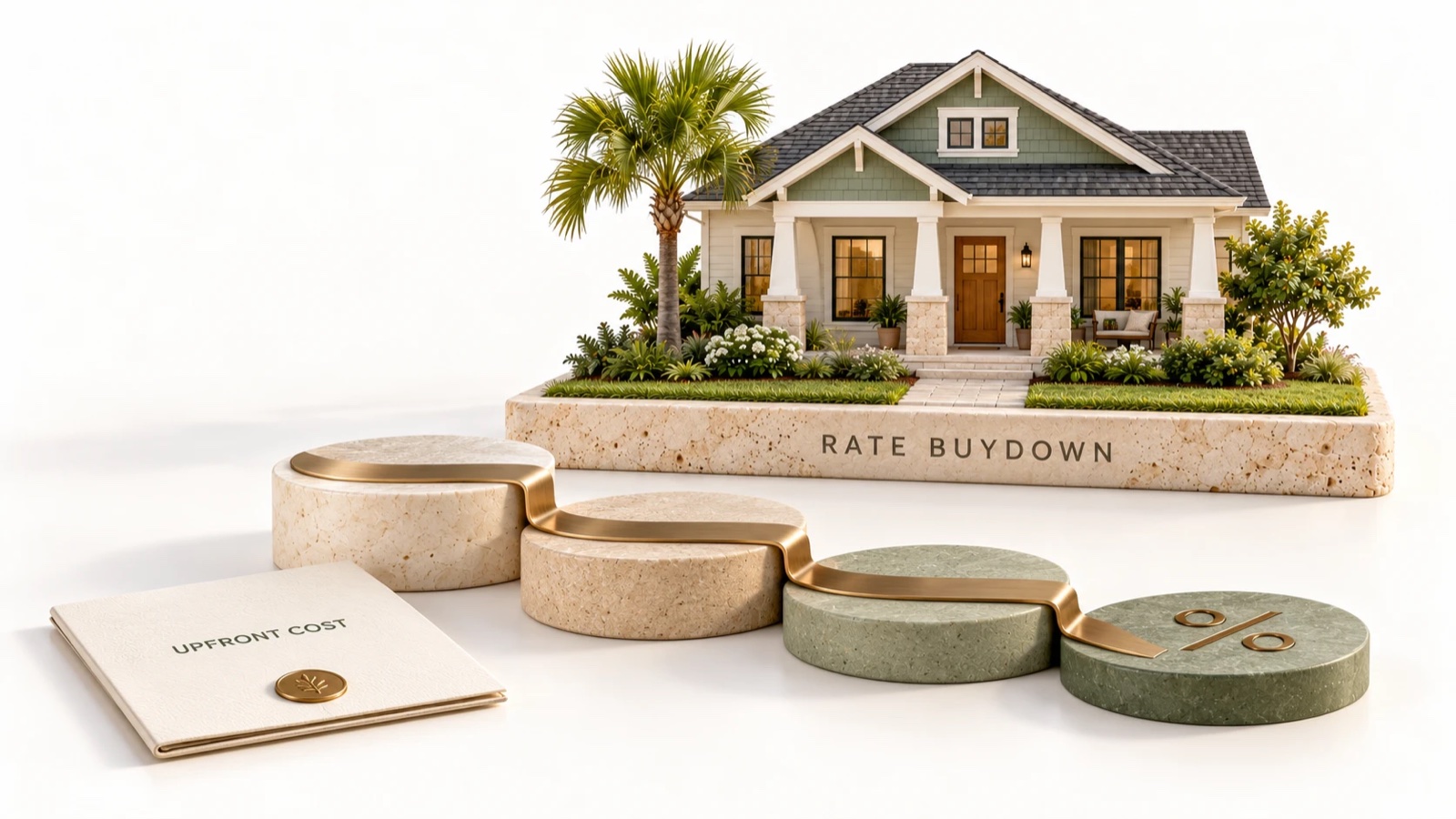
If you're worried about the monthly payment, a rate buydown is one of the most useful tools most buyers have never been told about. It's also easy to misunderstand, so let's make it simple.
Here's the good news. When rates feel high, you have options beyond waiting. A buydown is one of them, and sometimes somebody else pays for it.
What is a rate buydown?
A buydown is money paid upfront to lower your mortgage interest rate. That's the whole idea. Someone pays a little extra at the start, and in return your rate, and so your monthly payment, goes down.
There are two kinds, and they do very different things.
What's the difference between a temporary and a permanent buydown?
A temporary buydown lowers your rate for the first years of the loan, then it steps back up to the regular rate. The most common versions are named by how they step:
- A 2-1 buydown: your rate is two percentage points lower in year one, one point lower in year two, and the regular rate from year three on.
- A 3-2-1 buydown: three points lower in year one, two in year two, one in year three, and the regular rate from year four.
The money that covers the difference is set aside in a special account when you close, and it's used to pay down your payment each month during the buydown period. Fannie Mae's guidelines for conventional loans allow a temporary buydown of up to three years.
A permanent buydown lowers your rate for the life of the loan. You do it by paying discount points. According to the Consumer Financial Protection Bureau, one point equals one percent of the loan amount. On a $100,000 loan, that's $1,000. Paying points lowers your rate, and by how much depends on the lender, the kind of loan and the overall mortgage market.
Sources: Consumer Financial Protection Bureau; Fannie Mae Selling Guide.
Who pays for a buydown?
It depends on the deal, and this is where buyers often leave money on the table by not asking.
- You can pay for it out of your own funds.
- The seller can pay for it, as part of negotiating the sale. Some sellers would rather put money toward your rate than cut the price.
- A builder can pay for it as an incentive on a new construction home.
- Your lender can offer it as part of their own program.
When a seller or builder pays, it counts toward the limits on what they're allowed to contribute. Fannie Mae's interested-party contribution limits apply to conventional loans, and other loan programs have their own rules. Your lender tells you what's allowed for your loan.
Will a buydown help me qualify for the loan?
Usually not, and this surprises people. For a temporary buydown on a conventional loan, Fannie Mae says the lender must qualify you based on the regular note rate, not the lower bought-down rate.
That's actually good for you. It means you're approved for a payment you can handle when the buydown ends, so there's no cliff waiting for you in year three.
A permanent buydown works differently, because your rate is lower for good. Ask your lender how they count it.
Source: Fannie Mae Selling Guide.
Is a rate buydown worth it?
The honest answer is that it depends on how long you'll keep the loan, and on what else the money could do.
- Temporary buydowns are about cash flow. They give you a lower payment while you settle in, which can help if you're stretching for the first few years or know your income is about to go up. But the rate does step back up, so only count on it if you can comfortably afford the full payment. Some buyers plan to refinance if rates fall, but nobody can promise that they will.
- Permanent buydowns are about the long run. You pay more now to pay less every month for as long as you keep the loan. The longer you stay, the more it tends to pay off. If you might sell or refinance in a few years, you may not stay long enough to earn the cost back.
- When someone else is paying, the question changes. Is a buydown worth more to you than a lower price, or help with closing costs? Ask your lender to run both side by side.
The Consumer Financial Protection Bureau suggests asking a loan officer to show you two different options and to calculate the total cost over a few different possible timeframes. That's the right way to decide.
Source: Consumer Financial Protection Bureau.
What should I ask my lender about a buydown?
- Is this temporary or permanent, and how long does it last?
- What will my payment be each year, including when it steps up?
- Who is paying for it, and does my loan program allow that?
- If I skip the buydown, what could the same money do instead?
- How long would I need to keep the loan to come out ahead?
I'm not a lender, so your lender runs the exact numbers. My job is to help you ask the right questions and use the tool when it makes sense.
What about buydowns on new construction?
Some builders offer buydowns or other incentives, sometimes tied to using their preferred lender. They can be a real benefit. Ask what the incentive is, what it depends on, and whether the price changes if you take it. Then compare it against a quote from another lender.
That's one of the things I look at when I read a builder's contract before you sign. If you're looking at new builds, start with should I buy new construction?should I buy new construction?/new-construction
What's the next step?
Get your number first. A short call with a lender tells you what you can buy and which tools fit you. Here's what to expect on your first call with a lenderwhat to expect on your first call with a lender/blog/first-call-with-a-lender, and my buying power calculatorbuying power calculator/tools/buying-power gives you a rough starting estimate in a couple of minutes.
Then let's talk about whether a buydown belongs in your plan. Reach outReach out/contact and we'll figure it out together.
Frequently Asked Questions
Get the weekly Central Florida market brief
One short email each week: local market updates, fresh listings before they hit the search sites, and practical tips for buyers and sellers in Central Florida.
No spam. Unsubscribe anytime.